
Mugapakkha Jataka
Mugapakkha Jataka
In the ancient city of Uttarapancala, there lived a wise and just king named Dighiti. His reign was marked by peace and prosperity, and his people loved him dearly. Yet, despite his outward success, King Dighiti carried a secret sorrow, a consequence of a vow he had made in a past life.
During a period of deep contemplation, King Dighiti received a divine vision. In this vision, he saw himself in a previous existence as a Bodhisattva, born as a king named Mugapakkha. King Mugapakkha was a ruler of great compassion and foresight. He had a beautiful and virtuous queen, and together they lived a life of Dharma. However, their happiness was shadowed by a deep fear: the fear of drought. The land was prone to long periods of scarcity, and the king was deeply concerned for the welfare of his subjects.
One day, a wise sage visited King Mugapakkha's court. The sage, through his profound spiritual insight, revealed to the king that the kingdom's recurring droughts were a karmic consequence of a past action by the king himself. In a previous life, as a young man, he had experienced a moment of intense anger and had spoken harsh, cutting words to his father, words that had wounded his father's heart deeply. This act of disrespect and harshness, the sage explained, had created a spiritual imbalance that manifested as a lack of rain and prosperity for his kingdom.
King Mugapakkha was deeply saddened by this revelation. He recognized the truth in the sage's words and felt immense remorse for his past transgression. He understood that his kingdom's suffering was a direct reflection of his own inner state and his past actions. He realized that true leadership meant taking responsibility for the well-being of his people, not just in the present, but also by rectifying past errors.
Determined to atone for his mistake and to ensure the prosperity of his kingdom, King Mugapakkha made a solemn vow. He declared that he would remain in silent contemplation, observing complete abstention from speech, until the rains returned and his land was nourished. He believed that by relinquishing his voice, he was symbolically offering his ego and his past harshness to the universe, seeking forgiveness and balance.
The vision showed King Mugapakkha announcing his vow to his queen and his court. His queen, though worried about his well-being, understood the depth of his resolve and supported his decision, becoming his pillar of strength. The king then retreated to a secluded chamber, entering a state of profound meditative silence.
Days turned into weeks, and weeks into months. The kingdom watched with bated breath as their king remained in silent vigil. The court physicians and the queen ensured his physical needs were met, but his spiritual endeavor was his own. The silence of the king seemed to echo the silence of the parched earth. Yet, the king's resolve did not waver. He focused all his energy on cultivating inner peace, compassion, and a deep sense of remorse for his past actions.
During this period of silence, King Mugapakkha's inner strength grew exponentially. He experienced a profound connection with nature and with the suffering of his people. His silence became a powerful testament to his sincerity and his deep commitment to Dharma.
As the king's period of silent austerity reached its peak, a change began to occur. The atmosphere shifted. Dark clouds began to gather on the horizon, and a gentle breeze stirred the dry leaves. Then, the heavens opened, and a life-giving rain began to fall upon Uttarapancala. The land, so long thirsty, drank deeply, and the crops began to revive.
The vision showed the people rejoicing, their faces turned towards the sky, grateful for the blessed rain. King Mugapakkha, still in his meditative silence, felt a profound sense of peace. He knew that his vow had been fulfilled, not just by the return of the rain, but by the inner transformation he had undergone. The harshness that had once resided within him had been purified through silence and sincere repentance.
The vision concluded with King Mugapakkha breaking his silence, not with a shout, but with a gentle whisper of gratitude. He had learned that true power lies not in the loudness of one's voice, but in the purity of one's intentions and the sincerity of one's efforts to atone for past wrongs.
Back in his own time, King Dighiti of Uttarapancala understood the profound lesson of King Mugapakkha. He realized that his own past transgressions had been the root cause of his secret sorrow. Inspired by the example of his past self, he vowed to live a life of greater humility, compassion, and mindful speech. He understood that by cultivating inner peace and taking responsibility for his actions, he could not only bring prosperity to his kingdom but also achieve true liberation for himself.
— In-Article Ad —
💡Moral of the Story
True atonement and spiritual growth can be achieved through sincere repentance, mindful silence, and the cultivation of inner peace, leading to the rectification of past mistakes and the well-being of all.
Perfection: Patience (Khanti Paramita)
— Ad Space (728x90) —
More Jataka Tales You May Enjoy
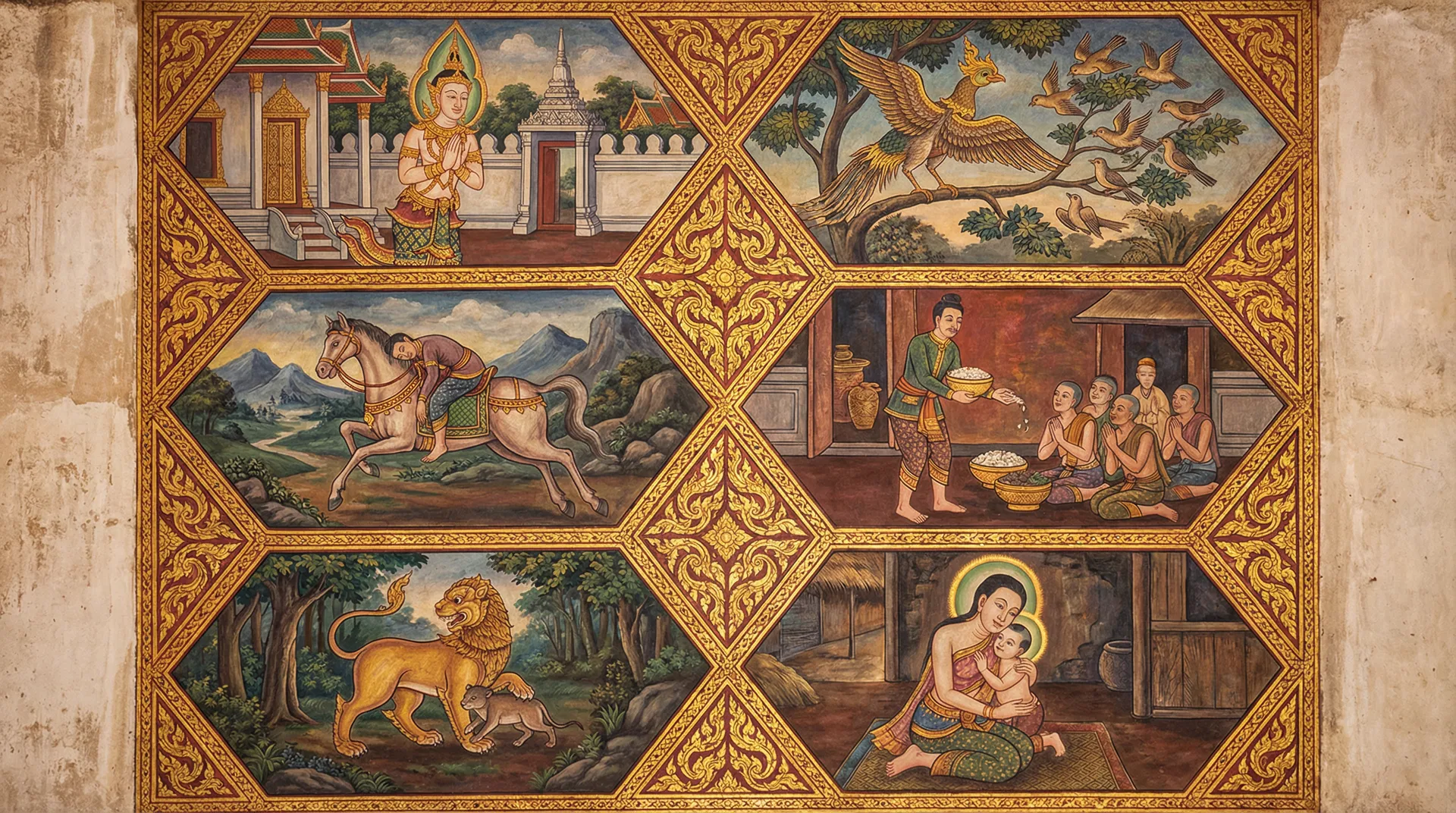 387Chakkanipāta
Sutasoma Jataka
Sutasoma JatakaIn a kingdom nestled between whispering mountains and a shimmering sea, there lived a...
💡 Wisdom and compassion are more powerful than brute force. True liberation comes from understanding and overcoming ignorance.
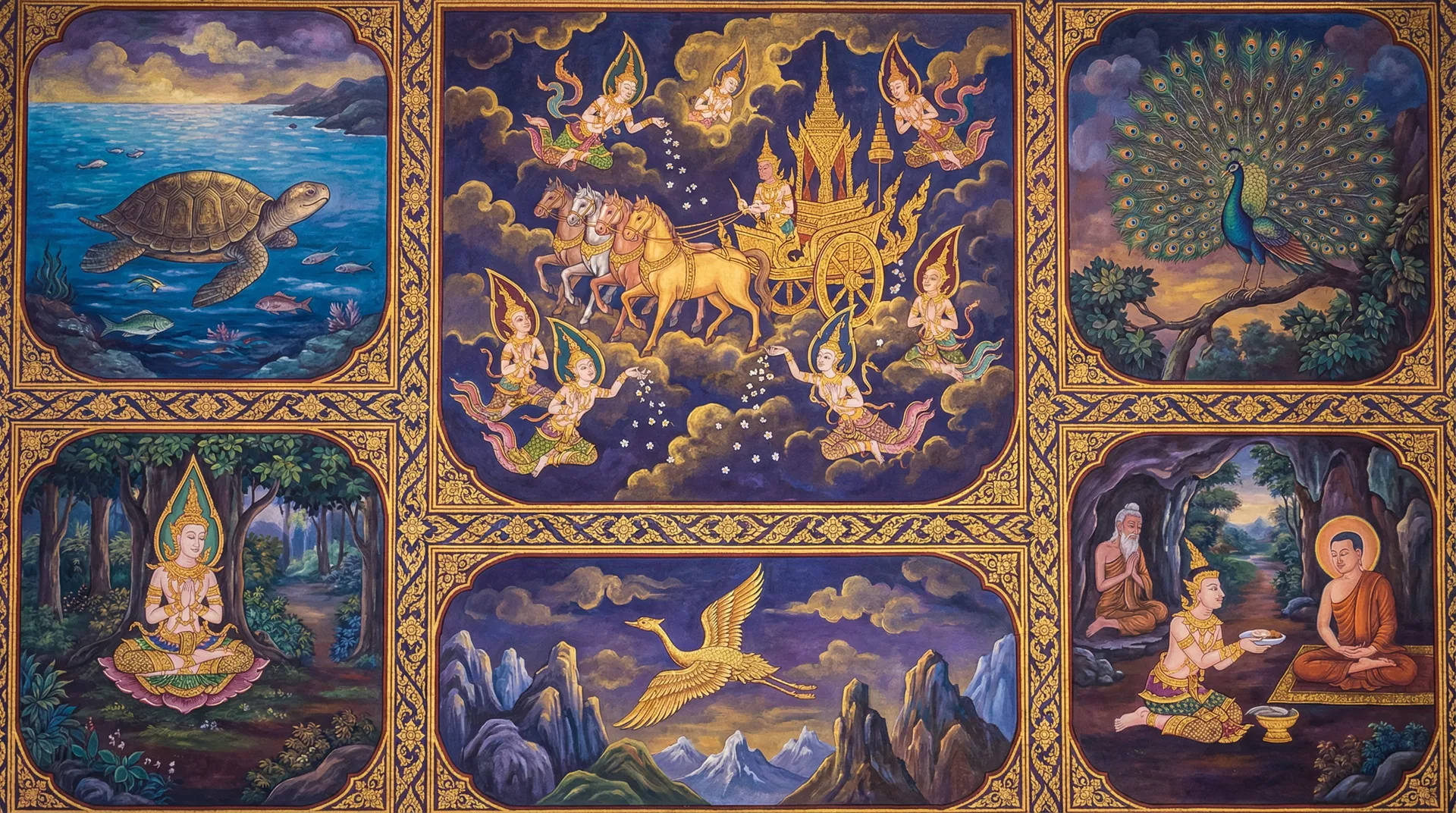 397Sattakanipāta
Sutasoma Jataka
Sutasoma JatakaIn a distant realm, nestled among rolling hills and verdant valleys, there once stood...
💡 The greatest power lies not in force, but in selfless compassion and the courage to offer oneself for the well-being of others, which can transform even the most destructive forces.
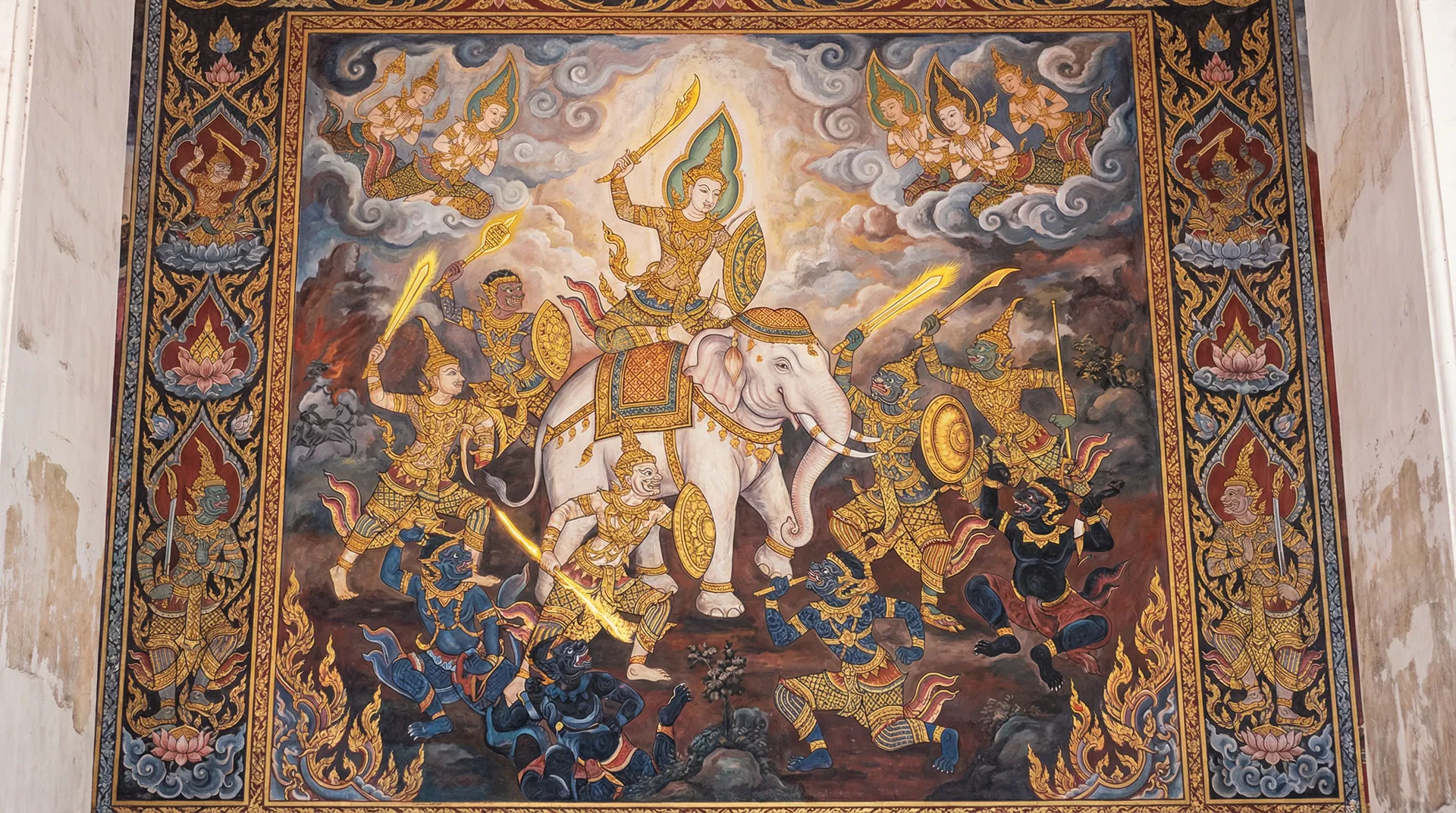 524Mahānipāta
Cullakapadaka Jataka
Cullakapadaka JatakaIn the flourishing city of Varanasi, the Bodhisatta was once born as a young asc...
💡 True wealth is not measured in material possessions but in inner contentment, wisdom, and detachment from greed. The greatest gift is the realization of one's own folly and the pursuit of inner peace.
 371Pañcakanipāta
Mugapakkha Jātaka
Mugapakkha JātakaIn the ancient kingdom of Varanasi, nestled beside the serene Ganges River, lived a...
💡 Beware of those who speak with honeyed words but harbor deceit in their hearts. True wisdom lies in discerning the hidden intentions behind actions.
367PañcakanipātaSAMUDDAPALA JATAKA
SAMUDDAPALA JATAKAIn the ancient city of Varanasi, where the Ganges flowed like a silver ribbon, liv...
💡 True leadership lies in selfless sacrifice for the well-being of the people. Compassion and virtue have the power to transform even the most avaricious hearts and bring about lasting prosperity.
 310Catukkanipāta
Samkicca Jātaka
The Humble Merchant's ResolveIn the bustling city of Varanasi, there lived a merchant named Samkicca...
💡 True strength lies not in physical might or aggression, but in unwavering resolve, unity, and the courage to face adversity with a determined spirit. Collective action and inner fortitude can overcome even the most daunting threats.
— Multiplex Ad —